
 Български
 Македонски
Why HoLEP?
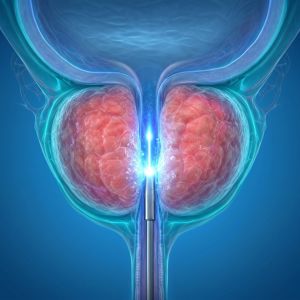
- Anatomically Complete Adenoma Enucleation
HoLEP enables complete removal of the hyperplastic transitional zone while preserving the surgical capsule. By following the natural anatomical plane between adenoma and capsule, the procedure achieves radical relief of bladder outlet obstruction independent of gland volume. Numerous long-term studies have demonstrated significantly lower reoperation rates compared with TURP, GreenLight vaporisation, and other tissue-ablative techniques.
- Superior Haemostasis and Enhanced Safety Profile
The 2.1 μm wavelength of the holmium:YAG laser provides simultaneous tissue incision and coagulation, resulting in excellent haemostatic control throughout the procedure. Consequently, HoLEP is particularly advantageous for patients receiving anticoagulant or antiplatelet therapy, as well as for those presenting with large-volume prostates and increased perioperative risk.
- Reduced Catheterisation and Length of Stay
Efficient haemostasis and complete removal of obstructive tissue facilitate early catheter removal and accelerated postoperative recovery. Most patients are discharged within 24 hours, with rapid restoration of spontaneous voiding.
- Size-Independent Surgical Efficacy
One of HoLEP’s defining advantages is its complete independence from prostate size. The procedure maintains excellent perioperative and functional outcomes in glands ranging from 30 g to well above 250 g, eliminating the need for open or robotic simple prostatectomy in the majority of cases.
- Durable Functional Outcomes
Long-term follow-up studies extending beyond ten years consistently demonstrate sustained improvements in maximum urinary flow rate (Qmax), post-void residual volume (PVR), International Prostate Symptom Score (IPSS), and quality-of-life metrics.
Mastering Anatomical Enucleation
Despite its proven advantages, HoLEP remains one of the most technically demanding procedures in contemporary endourology.
Successful execution of the en bloc technique with early apical release requires precise identification of the capsular plane, meticulous preservation of the external urinary sphincter complex, advanced endoscopic orientation, and refined laser-tissue interaction control.
The manegement of the prostatic apex remains particularly critical, as inadequate technique may compromise postoperative continence outcomes.
For this reason, mastery of HoLEP cannot be achieved through theoretical education alone. Structured mentorship, direct operating room exposure, real-time surgical guidance, and continuous expert feedback are essential for overcoming the learning curve and achieving procedural reproducibility.
.holep-cta-btn:hover {
background: #117a65 !important;
transform: translateY(-2px);
box-shadow: 0 6px 20px rgba(22, 160, 133, 0.5) !important;
}